
Introduction
Search Engine Optimization, or SEO, is a key strategy in digital marketing. Its main goal is to make sure a website appears more prominently in search engine results. This study guide is here to help you learn about SEO, covering both the basics and more complex aspects. You’ll explore on-page SEO, which involves optimizing the content and layout of your site, and off-page SEO, which is about improving your site’s reputation through external links. Technical SEO is also discussed, focusing on improving the backend structure and performance of your site. You will learn about keyword research to find the right words people use in searches. The guide also covers strategies to create backlinks—connections from other websites to yours—and how to use analytics tools to track your progress. Whether you’re just starting with SEO or looking to deepen your knowledge, this guide aims to equip you with essential skills for mastering SEO in 2025.
Key SEO Concepts & Strategies
1. Primary Goal of SEO
The main goal of SEO is to make a website appear higher in search engine results. This helps more people notice the website, visit it, and make purchases or sign up for services. Companies use SEO to bring in new customers and make more people aware of their brand, which can lead to increased sales and earnings. By focusing on SEO, businesses aim to improve their online presence and grow their customer base. This, in turn, helps in achieving better revenue and business success.
2. Three Main Components of SEO
SEO consists of three core components:
- On-Page SEO: Optimizing website content, meta tags, internal linking, and keyword placement.
- Off-Page SEO: Building authority through backlinks, social signals, and external brand mentions.
- Technical SEO: Ensuring a website is crawlable, fast, mobile-friendly, and properly structured for search engines.
3. Understanding Search Engines
Before you start using SEO strategies, it’s important to understand how search engines work. Search engines, such as Google, Bing, and Yahoo, use complicated formulas to list and rank web pages by checking how relevant and high-quality they are.
4. Search Engine Results Page (SERP)
When you search for something online using a search engine, the page that comes up is called a SERP. This page shows all the results the search engine found for your query. These results can be different types. You will see regular links, which we call organic listings. There might also be paid ads that companies pay to show. Sometimes, you see special sections with quick information, like featured snippets. Local results also appear if the search is about something nearby. Plus, there can be rich snippets that give even more details about certain topics.
5. Alternative Search Engines
While Google dominates the market, other search engines include:
- Bing
- Yahoo
- Yandex
- DuckDuckGo
- Baidu
- Ecosia
- Neeva
-
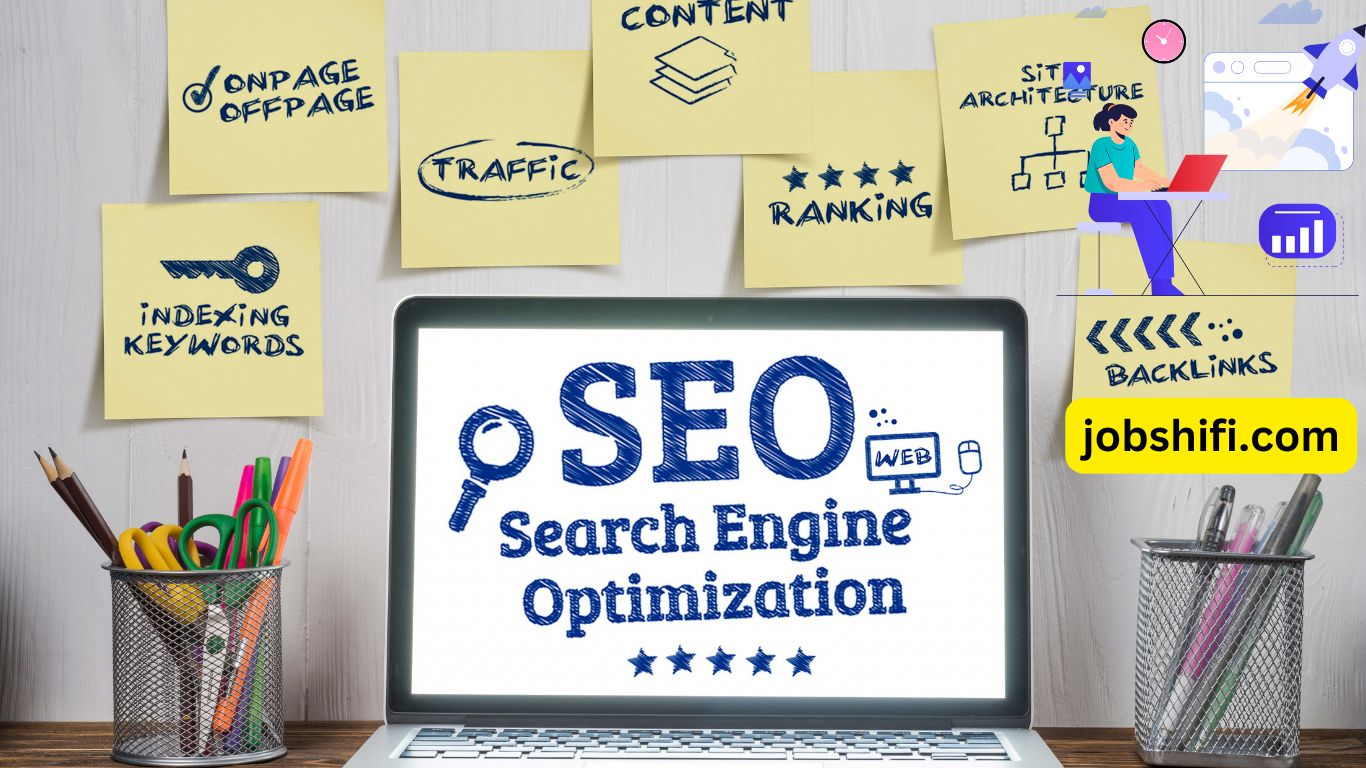
Boost Your Career with the SEO Practical Course 2025 – Learn Advanced Strategies to Rank Higher on Google Naver
6. Long-Tail Keywords
Long-tail keywords are phrases that are very specific and detailed. They don’t get as many searches as shorter, broader keywords, but they can often lead to more sales or desired actions because they align closely with what the user is looking for. These keywords face less competition and are better at satisfying the exact needs and intentions of users because they match the detailed queries people often type when they know exactly what they want. This can be particularly useful for businesses trying to attract customers who are ready to make a purchase or take specific action.
7. Navigational Keywords vs. Other Keywords
Navigational keywords are what people use in search engines when they are looking for a particular website or brand. For instance, if someone types “Facebook login” into the search bar, they are using a navigational keyword. This type of keyword is not the same as informational or transactional keywords. Navigational keywords show that the person wants to go directly to a specific site they already know about, rather than searching for general information or looking to make a purchase.
8. Web 2.0 in Off-Page SEO
Web 2.0 SEO involves leveraging platforms like blogs, forums, and social media to create content and generate backlinks. These platforms help increase visibility and authority.
9. Importance of Keyword Density
Keyword density refers to the frequency of a target keyword within content. Ideally, it should range between 3-4% for 3-4 word keywords, ensuring relevance without overstuffing, which can lead to penalties.
10. Role of Robots.txt File
The robots.txt file instructs search engine crawlers on which pages they should or shouldn’t index. This is useful for blocking duplicate content, private pages, or unimportant sections of a website.
Advanced SEO Topics
1. The Evolution of SEO & AI Integration
Modern SEO incorporates AI-driven algorithms that analyze user behavior and content relevance. Machine learning models, such as Google’s BERT and RankBrain, prioritize intent-based searches over traditional keyword matching.
2. User Intent in Keyword Research
Understanding user intent ensures that keyword selection aligns with different stages of the customer journey:
- Informational: Users seek knowledge (e.g., “how SEO works”).
- Navigational: Users look for specific sites (e.g., “Jobshifi.com careers”).
- Transactional: Users plan to make a purchase, such as buying SEO tools.
3. Ethical Link-Building Strategies
Backlinks remain a vital ranking factor. Best practices include:
- Guest blogging on reputable sites
- Earning links through high-quality content
- Digital PR and influencer collaborations
Avoid manipulative link schemes, as Google penalizes unethical tactics.
4. On-Page SEO Factors
On-page SEO involves:
- Keyword optimization
- Content relevance & quality
- User experience (UX) improvements
- Technical enhancements (site speed, mobile-friendliness)
5. SEO Analytics Tools
Tools like Google Analytics and Google Search Console help monitor website performance. These tools provide insights into traffic sources, keyword rankings, click-through rates (CTR), and indexing issues.
Glossary of SEO Terms
Essential SEO Terminology
- Backlinks: External links pointing to your website, which impact rankings.
- Domain Authority (DA): A Moz metric predicting website ranking potential.
- Page Authority (PA): Measures the ranking strength of a specific webpage.
- Keyword Stuffing: Excessive use of keywords, leading to penalties.
- Latent Semantic Indexing (LSI) Keywords: Contextually related words to main keywords.
- Canonical Tag: Specifies the preferred version of duplicate content pages.
- Core Web Vitals: Google’s page experience metrics, including load time and interactivity.
- Click-through rate (CTR): The percentage of users who click on a search result.
- Organic Search: Traffic from unpaid search engine results.
- Schema Markup: Structured data enhancing search result appearances (e.g., rich snippets).
- Crawlability & Indexability: Determines how search engines navigate and store web content.
Conclusion
EO in 2025 is an evolving field requiring continuous adaptation to search engine updates and AI-driven changes. By mastering on-page, off-page, and technical SEO, businesses can maximize their online visibility and drive sustainable traffic growth. Staying updated with analytics and ethical SEO practices ensures long-term success in the digital landscape.


