
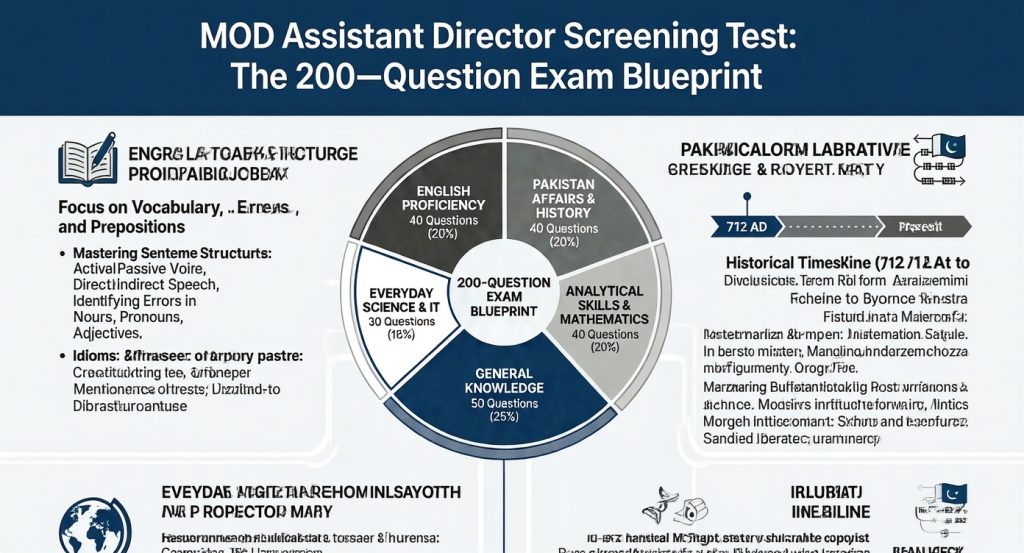
1. General Knowledge: Geography, Countries, and International Organisations (MCQs 1-50)
1. Which of the following is the deepest point in the Pacific Ocean? (a) Java Trench (b) Mariana Trench (c) Puerto Rico Trench (d) Sunda Trench Answer: (b)
2. The “Atacama Desert”, known as the driest non-polar place on Earth, is situated in which continent? (a) Africa (b) Asia (c) South America (d) Australia Answer: (c)
3. Which mountain range contains the world’s highest non-Asian peak, Aconcagua? (a) The Himalayas (b) The Alps (c) The Andes (d) The Rockies Answer: (c)
4. The “Kalahari Desert” is primarily located in which part of Africa? (a) Northern Africa (b) Western Africa (c) Southern Africa (d) Eastern Africa Answer: (c)
5. Which sea is famous for having no coastline, being bounded instead by four ocean currents? (a) Sargasso Sea (b) Red Sea (c) Caspian Sea (d) Mediterranean Sea Answer: (a)
6. The “Strait of Malacca” is a vital shipping lane connecting the Indian Ocean with the: (a) Atlantic Ocean (b) Pacific Ocean (c) Arctic Ocean (d) Antarctic Ocean Answer: (b)
7. Which of the following is the highest mountain peak in the Alps? (a) Mount Blanc (b) Mount Elbrus (c) Mount Kilimanjaro (d) Mount Cook Answer: (a)
8. The “Great Sandy Desert” is located in which country? (a) Egypt (b) Australia (c) Mongolia (d) Chile Answer: (b)
9. Which of the following countries was formerly known as “Upper Volta”? (a) Burkina Faso (b) Namibia (c) Sri Lanka (d) Bangladesh Answer: (a)
10. What is the current name of the country formerly known as “Formosa”? (a) Thailand (b) Taiwan (c) Myanmar (d) Vietnam Answer: (b)
11. The distinctive name “Land of the Proteas” is often associated with: (a) New Zealand (b) South Africa (c) Netherlands (d) Japan Answer: (b)
12. Which city is famously known by the distinctive name “The City of Skyscrapers”? (a) London (b) Tokyo (c) New York (d) Dubai Answer: (c)
13. “Mesopotamia” is the historical name of which modern-day country? (a) Iran (b) Iraq (c) Egypt (d) Jordan Answer: (b)
14. What is the capital city of Kazakhstan? (a) Almaty (b) Astana (c) Bishkek (d) Tashkent Answer: (b)
15. Which European city is known as the “City of Canals”? (a) Venice (b) Amsterdam (c) Paris (d) Bruges Answer: (a)
16. The “Land of the Golden Fleece” refers to which country? (a) Australia (b) Greece (c) Turkey (d) Italy Answer: (a)
17. What is the capital of Morocco? (a) Casablanca (b) Rabat (c) Marrakech (d) Fez Answer: (b)
18. Which country is known by the old name “Kampuchea”? (a) Laos (b) Cambodia (c) Vietnam (d) Malaysia Answer: (b)
19. The “Great Lakes” of North America include how many distinct lakes? (a) Three (b) Five (c) Seven (d) Ten Answer: (b)
20. Which city is known as the “Quaker City”? (a) Chicago (b) Philadelphia (c) Washington (d) Boston Answer: (b)
21. The United Nations Charter was signed in 1945 in which city? (a) London (b) San Francisco (c) New York (d) Geneva Answer: (b)
22. Which UN organ has the power to authorise military action to maintain peace? (a) General Assembly (b) International Court of Justice (c) Security Council (d) Secretariat Answer: (c)
23. The official term of a non-permanent member of the UN Security Council is: (a) 1 year (b) 2 years (c) 3 years (d) 5 years Answer: (b)
24. The “Veto Power” in the United Nations is exercised by: (a) All member states (b) The Secretary-General (c) Only the five permanent members of the Security Council (d) The International Court of Justice Answer: (c)
25. Which international organisation is headquartered in Brussels, Belgium? (a) UNO (b) NATO (c) OPEC (d) SAARC Answer: (b)
26. The Food and Agriculture Organisation (FAO) of the UN is headquartered in: (a) Paris (b) Geneva (c) Rome (d) Vienna Answer: (c)
27. Which organisation replaced the League of Nations? (a) NATO (b) UNO (c) SEATO (d) The European Union Answer: (b)
28. The first Secretary-General of the United Nations was: (a) U Thant (b) Trygve Lie (c) Dag Hammarskjöld (d) Kurt Waldheim Answer: (b)
29. INTERPOL, the international police organisation, has its headquarters in: (a) London (b) Lyon (c) New York (d) Berlin Answer: (b)
30. The “World Bank” and the “International Monetary Fund” (IMF) are collectively known as the: (a) Geneva Institutions (b) Bretton Woods Institutions (c) New York Twins (d) Paris Club Answer: (b)
31. In the context of the UN, what does the acronym “UNHCR” stand for? (a) United Nations High Commissioner for Refugees (b) United Nations Health Council for Regions (c) United Nations Human Capital Resources (d) United Nations Housing and City Reform Answer: (a)
32. Which country is the newest member to join the United Nations (admitted in 2011)? (a) East Timor (b) Montenegro (c) South Sudan (d) Switzerland Answer: (c)
33. The International Court of Justice consists of how many judges? (a) 9 (b) 11 (c) 15 (d) 21 Answer: (c)
34. Which UN agency is primarily responsible for the “World Heritage Sites”? (a) UNICEF (b) UNDP (c) UNESCO (d) WHO Answer: (c)
35. The term “Diplomatic Immunity” is codified under which international convention? (a) Geneva Convention (b) Vienna Convention on Diplomatic Relations (c) Hague Convention (d) Treaty of Versailles Answer: (b)
36. “Amnesty International” is an organisation that focuses on: (a) Environmental protection (b) Human rights (c) Trade regulations (d) Atomic energy Answer: (b)
37. Which country is not a member of the G7? (a) Japan (b) Canada (c) Russia (d) Italy Answer: (c)
38. The “European Union” (EU) was formally established by which treaty? (a) Treaty of Rome (b) Maastricht Treaty (c) Treaty of Paris (d) Treaty of Lisbon Answer: (b)
39. “Transparency International” is known for publishing the: (a) Global Peace Index (b) Corruption Perceptions Index (c) Human Development Index (d) World Press Freedom Index Answer: (b)
40. The “Arab League” is headquartered in which city? (a) Riyadh (b) Cairo (c) Damascus (d) Baghdad Answer: (b)
41. The “Red Cross” was founded by: (a) Florence Nightingale (b) Jean-Henry Dunant (c) Clara Barton (d) Woodrow Wilson Answer: (b)
42. Which country has the world’s largest number of time zones? (a) Russia (b) USA (c) France (d) China Answer: (c)
43. The “Nordic Council” includes which of the following countries? (a) Germany (b) Iceland (c) Poland (d) Estonia Answer: (b)
44. Which is the main judicial organ of the European Union? (a) International Court of Justice (b) European Court of Justice (c) European Court of Human Rights (d) International Criminal Court Answer: (b)
45. The “Kyoto Protocol” is an international treaty that deals with: (a) Nuclear disarmament (b) Reduction of greenhouse gas emissions (c) Intellectual property rights (d) Maritime safety Answer: (b)
46. High-priority summits scheduled for 2025–2026 are expected to focus heavily on which treaty renewal regarding global health security? (a) The Pandemic Treaty (WHO) (b) The Treaty of Trianon (c) The Warsaw Pact (d) The Antarctica Treaty Answer: (a)
47. In the 2025 global diplomatic agenda, which nation is scheduled to host the G20 Summit as a significant milestone for the African continent? (a) Egypt (b) Nigeria (c) South Africa (d) Kenya Answer: (c)
48. The 2026 United Nations Climate Change Conference (COP 31) is being prioritised in international summits for its focus on: (a) Fossil fuel subsidies in the 19th century (b) Decarbonisation and climate financing for developing nations (c) Redefining the borders of the Arctic (d) The expansion of the Silk Road Answer: (b)
49. According to 2025–2026 current affairs priorities, “Summit Diplomacy” will be vital in resolving disputes over: (a) The 1857 War of Independence (b) Artificial Intelligence (AI) ethics and autonomous weapons systems (c) The partitioning of the Ottoman Empire (d) The restoration of the Gold Standard Answer: (b)
50. The “Sustainable Development Goals” (SDGs) are a high-priority agenda item for international conferences leading up to their target year of: (a) 2025 (b) 2030 (c) 2040 (d) 2050 Answer: (b)
——————————————————————————–
2. English Language Proficiency: Vocabulary and Grammar (MCQs 51-100)
51. To oil the knocker: (a) To tip the office-boy (b) To do a work with increased pace (c) To revive old enmity (d) To instigate a person to do a job Answer: (a)
52. To cut the crackle: (a) To humiliate (b) To annoy someone (c) To act in a friendly way (d) To stop talking and start Answer: (d)
53. To provide entertainment: (a) To provide entertainment (b) To keep company (c) To deceive or humiliate him (d) To exploit a person Answer: (c)
54. To cool one’s heels: (a) To rest for sometime (b) To give no importance to someone (c) To remain in a comfortable position (d) To be kept waiting for sometime Answer: (d)
55. By the rule of thumb: (a) By the use of force (b) By the use of trickery (c) By cheating and deception (d) By practical experience which is rather rough Answer: (d)
56. A fool’s errand: (a) A blunder (b) An impossible task (c) A useless undertaking (d) None of these Answer: (c)
57. To go at each other hammer and tongs: (a) To fight with weapons (b) To argue noisily (c) To hug each other (d) To go crazy about meeting each other Answer: (b)
58. To hit the nail on the head: (a) To touch the exact point (b) To move with the time (c) To manipulate somehow (d) To beat mercilessly Answer: (a)
59. At the drop of a hat: (a) Immediately (b) Without delay (c) As a follow up of orders (d) In a good moment Answer: (a)
60. To tread on the heels of: (a) To follow close behind (b) To follow the example of another (c) To disagree with the conduct of another (d) To run away Answer: (a)
61. To go into a huddle: (a) To engage oneself in a conspiracy (b) To hold a secret conference (c) To land oneself in trouble (d) To be in a crisis formally Answer: (b)
62. To go the whole hog: (a) To sacrifice everything (b) To do something thoroughly (c) To bully someone (d) To make oneself all in all Answer: (b)
63. To talk through one’s hat: (a) To speak without stopping (b) To talk wisely (c) To talk nonsense (d) To speak fluently Answer: (c)
64. Flash in the pan: (a) Hopeful situation (b) Change for the better (c) Explosion (d) Promising start followed by failure Answer: (d)
65. To plough the sands: (a) To busy oneself in a way which cannot lead to any profitable result (b) To advance one’s position in life (c) To afford ground for expecting a good result (d) To act together in harmony Answer: (a)
66. To cock a snook at somebody: (a) To deceive somebody (b) To put a blame on somebody (c) To make fun of somebody (d) To make a rude gesture Answer: (d)
67. Shot in the arm: (a) A fatal blow (b) An offensive remark (c) A dreadful happening (d) A thing that encourages Answer: (d)
68. To pull the wool over somebody’s eyes: (a) To make one blind (b) To run after illusions (c) To hide one’s real actions (d) To delude someone Answer: (d)
69. To keep up appearances: (a) To maintain outward show (b) To keep patience (c) To make oneself famous (d) To maintain friendliness Answer: (a)
70. To rule the roost: (a) To preserve oneself from harm (b) To domineer over others with whom one is associated (c) To advance in harmony (d) To move forward on the same path Answer: (b)
71. To be in the mire: (a) Be under debt (b) Be in love (c) Be in difficulties (d) Be uneasy Answer: (c)
72. To be down in the mouth: (a) To be humiliated (b) To tell lies (c) In a fighting mood (d) Out of spirits Answer: (d)
73. Honesty is at a discount: (a) Discouraged (b) Rare (c) Undervalued (d) Unknown Answer: (c)
74. His best jokes fell flat: (a) Were not paid attention to (b) Had no effect (c) Became completely unnerved (d) Faced total failure Answer: (b)
75. To bury the hatchet: (a) To help each other (b) To avoid each other (c) To make peace (d) To become partners Answer: (c)
76. Choose the synonym (closest meaning) for the word: (a) Cancellation (b) Dismissal (c) Call or command to appear (d) Secret meeting Answer: (c)
77. Choose the synonym (closest meaning) for the word: (a) Landscape or view (b) Painting (c) Hidden object (d) Weather Answer: (a)
78. Choose the synonym (closest meaning) for the word: (a) Difficulties (b) Accessories or equipment (c) Absences (d) Distractions Answer: (b)
79. Choose the synonym (closest meaning) for the word: (a) Interrupted (b) Deduced or concluded (c) Blocked (d) Spoken loudly Answer: (b)
80. Choose the antonym (opposite meaning) for the word: (a) Merit (b) Vice (c) Goodness (d) Purity Answer: (b)
81. Choose the antonym (opposite meaning) for the word: (a) Meek (b) Proud (c) Modest (d) Poor Answer: (b)
82. Choose the antonym (opposite meaning) for the word: (a) Clear (b) Opaque (c) Bright (d) Lucid Answer: (b)
83. Choose the synonym (closest meaning) for the word: (a) Lazy (b) Hardworking (c) Famous (d) Rich Answer: (b)
84. Choose the synonym (closest meaning) for the word: (a) Lost (b) Obtained (c) Borrowed (d) Renounced Answer: (b)
85. Choose the antonym (opposite meaning) for the word: (a) Sudden (b) Gradual (c) Violent (d) Quick Answer: (b)
86. Choose the synonym (closest meaning) for the word: (a) Reveal (b) Hide (c) Declare (d) Expose Answer: (b)
87. Choose the synonym (closest meaning) for the word: (a) Tardy (b) Quick (c) Delayed (d) Slow Answer: (b)
88. Choose the antonym (opposite meaning) for the word: (a) Contented (b) Angry (c) Restless (d) Worried Answer: (a)
89. Choose the synonym (closest meaning) for the word: (a) Departure (b) Arrival (c) Escape (d) Retreat Answer: (b)
90. Choose the antonym (opposite meaning) for the word: (a) Careful (b) Reckless (c) Alert (d) Prudent Answer: (b)
91. Choose the grammatically correct sentence regarding the use of nouns: (a) We received summons to attend the court. (b) We received a summons to attend the court. (c) We received many summon to attend the court. (d) We received summoning to attend the court. Answer: (b)
92. Select the correct version from the options below: (a) The sceneries of Swat are wonderful. (b) The scenery of Swat is wonderful. (c) The scenery of Swat are wonderful. (d) The sceneries of Swat is wonderful. Answer: (b)
93. Choose the correct form of pronoun usage: (a) Who is in the room? It is me. (b) Who is in the room? It is I. (c) Who is in the room? Its me. (d) Who is in the room? Its I. Answer: (b)
94. Which of the following sentences correctly handles collective noun agreement? (a) The jury was divided in their verdict. (b) The jury were divided in their verdict. (c) The jury are divided in its verdict. (d) The jury were divided in its verdict. Answer: (b)
95. Choose the grammatically correct sentence: (a) Aftab is weak in mathematic. (b) Aftab is weak in mathematics. (c) Aftab is weak in the mathematics. (d) Aftab is weak in the mathematic. Answer: (b)
96. Identify the correct sentence regarding Subject-Verb Agreement: (a) Tomorrow will be Sunday and it will be a holiday. (b) Tomorrow shall be Sunday and it shall be a holiday. (c) Tomorrow will be Sunday and it shall be a holiday. (d) Tomorrow being Sunday and it will be a holiday. Answer: (a)
97. Select the correct sentence: (a) None of these two have come. (b) None of these two has come. (c) Neither of them was present. (d) Neither of them were present. Answer: (c)
98. Choose the correct sentence: (a) We are his son-in-laws. (b) We are his sons-in-law. (c) We are his sons-in-laws. (d) We are his son-in-law. Answer: (b)
99. Choose the grammatically correct version: (a) His hairs are white. (b) His hair is white. (c) His hair are white. (d) His hairs is white. Answer: (b)
100. Select the correct sentence: (a) The news are true. (b) The news is true. (c) The news were true. (d) The news being true. Answer: (b)
——————————————————————————–
3. Pakistan Affairs: Pre-partition History and Strategic Facts (MCQs 101-150)
101. Muhammad Bin Qasim, the Umayyad general, conquered Sindh in which year? (a) 710 AD (b) 712 AD (c) 715 AD (d) 720 AD Answer: (b)
102. Sultan Mahmud Ghaznavi is noted for conducting how many invasions of the subcontinent? (a) 10 (b) 12 (c) 17 (d) 20 Answer: (c)
103. The First Battle of Panipat (1526) was fought between Babur and: (a) Ibrahim Lodhi (b) Rana Sanga (c) Hemu (d) Sher Shah Suri Answer: (a)
104. Which Mughal Emperor is famous for building the Taj Mahal at Agra? (a) Akbar (b) Jahangir (c) Shah Jahan (d) Aurangzeb Answer: (c)
105. The War of Independence, which marked the end of Mughal rule and the start of British Raj, began in: (a) 1757 (b) 1857 (c) 1885 (d) 1905 Answer: (b)
106. Sir Syed Ahmad Khan founded the Muhammadan Anglo-Oriental College in Aligarh in: (a) 1857 (b) 1875 (c) 1885 (d) 1906 Answer: (b)
107. The Partition of Bengal was carried out by Lord Curzon in: (a) 1901 (b) 1905 (c) 1911 (d) 1916 Answer: (b)
108. The All India Muslim League was established in Dhaka on 30th December: (a) 1905 (b) 1906 (c) 1909 (d) 1913 Answer: (b)
109. The “Lucknow Pact” of 1916 is significant because it involved a joint demand for reforms by: (a) The British and the Congress (b) The Congress and the Muslim League (c) The Muslim League and the British (d) The Khilafat Committee and the British Answer: (b)
110. The Khilafat Movement was launched in the subcontinent to protest against the treatment of: (a) Saudi Arabia (b) Turkey (c) Palestine (d) Iran Answer: (b)
111. Quaid-e-Azam Muhammad Ali Jinnah presented his “Fourteen Points” in the year: (a) 1927 (b) 1928 (c) 1929 (d) 1930 Answer: (c)
112. Allama Iqbal delivered his famous Allahabad Address, suggesting a separate Muslim state, in: (a) 1928 (b) 1930 (c) 1933 (d) 1940 Answer: (b)
113. The name “Pakistan” was first proposed in the pamphlet “Now or Never” (1933) by: (a) Allama Iqbal (b) Quaid-e-Azam (c) Chaudhry Rehmat Ali (d) Liaquat Ali Khan Answer: (c)
114. The “Pakistan Resolution” was passed at the annual session of the Muslim League at Lahore on: (a) 23 March 1930 (b) 23 March 1933 (c) 23 March 1940 (d) 14 August 1947 Answer: (c)
115. Who moved the Pakistan Resolution in the 1940 Lahore Session? (a) Quaid-e-Azam (b) Maulvi A.K. Fazlul Huq (c) Sir Sikandar Hayat Khan (d) Chaudhry Khaliquzzaman Answer: (b)
116. The Cripps Mission visited India in 1942 to secure Indian cooperation for: (a) World War I (b) World War II (c) The Khilafat Movement (d) The Civil Disobedience Movement Answer: (b)
117. The “Cabinet Mission” arrived in India in 1946 to discuss the transfer of power with how many members? (a) Two (b) Three (c) Five (d) Seven Answer: (b)
118. The “3rd June Plan” (1947) for the partition of the subcontinent was announced by: (a) Lord Wavell (b) Lord Mountbatten (c) Lord Curzon (d) Clement Attlee Answer: (b)
119. Pakistan became an independent state on 14th August 1947, corresponding to which Islamic date? (a) 10 Muharram (b) 27 Ramazan (c) 12 Rabi-ul-Awal (d) 1 Shawwal Answer: (b)
120. Quaid-e-Azam took oath as the first Governor-General of Pakistan on: (a) 14 August 1947 (b) 15 August 1947 (c) 23 March 1948 (d) 11 September 1948 Answer: (b)
121. Who was the first Prime Minister of Pakistan? (a) Khawaja Nazimuddin (b) Liaquat Ali Khan (c) Muhammad Ali Bogra (d) I.I. Chundrigar Answer: (b)
122. The boundary commission between India and Pakistan in 1947 was headed by: (a) Lord Mountbatten (b) Sir Cyril Radcliffe (c) Pethick-Lawrence (d) Stafford Cripps Answer: (b)
123. The Objectives Resolution was passed by the First Constituent Assembly of Pakistan in: (a) 1947 (b) 1948 (c) 1949 (d) 1950 Answer: (c)
124. The first constitution of Pakistan was enforced on: (a) 14 August 1947 (b) 23 March 1956 (c) 8 June 1962 (d) 14 August 1973 Answer: (b)
125. The 1973 Constitution of Pakistan introduced which form of government? (a) Presidential (b) Parliamentary (c) Unitary (d) Monarchy Answer: (b)
126. Which of the following is the highest mountain peak in Pakistan? (a) Nanga Parbat (b) K2 (Godwin-Austen) (c) Rakaposhi (d) Tirich Mir Answer: (b)
127. The Karakoram Range separates Pakistan from which country? (a) Afghanistan (b) Iran (c) China (d) India Answer: (c)
128. Which mountain range is located in the west of the Indus River? (a) Himalayas (b) Karakoram (c) Sulaiman Range (d) Salt Range Answer: (c)
129. The largest province of Pakistan by land area is: (a) Punjab (b) Sindh (c) Balochistan (d) Khyber Pakhtunkhwa Answer: (c)
130. The smallest province of Pakistan by land area is: (a) Sindh (b) Punjab (c) Khyber Pakhtunkhwa (d) Balochistan Answer: (c)
131. Which is the longest river in Pakistan? (a) Jhelum (b) Chenab (c) Indus (d) Ravi Answer: (c)
132. The “Thar Desert” is primarily located in which province? (a) Punjab (b) Sindh (c) Balochistan (d) Khyber Pakhtunkhwa Answer: (b)
133. Which city of Pakistan is known as the “City of Textiles”? (a) Karachi (b) Faisalabad (c) Lahore (d) Hyderabad Answer: (b)
134. The “Siachen Glacier” (a) Himalayas (b) Karakoram (c) Hindu Kush (d) Sulaiman Range Answer: (b)
135. Which pass connects Pakistan with Afghanistan through the Khyber district? (a) Bolan Pass (b) Gomal Pass (c) Khyber Pass (d) Khunjerab Pass Answer: (c)
136. The highest civil award in Pakistan is: (a) Hilal-e-Jurat (b) Nishan-e-Haider (c) Nishan-e-Pakistan (d) Sitara-e-Imtiaz Answer: (c)
137. Which of the following is the national animal of Pakistan? (a) Markhor (b) Snow Leopard (c) Bengal Tiger (d) Indus Dolphin Answer: (a)
138. The national anthem of Pakistan, “Pak Sarzamin”, was composed by: (a) Hafeez Jullundhri (b) Ahmed G. Chagla (c) Faiz Ahmed Faiz (d) Allama Iqbal Answer: (b)
139. Which is the largest artificial lake in Pakistan? (a) Manchar Lake (b) Keenjhar Lake (c) Saiful Muluk Lake (d) Hub Lake Answer: (b)
140. The Khewra Salt Mine, one of the largest in the world, is located in the: (a) Karakoram Range (b) Salt Range (c) Sulaiman Range (d) Himalayas Answer: (b)
141. Pakistan’s first nuclear power plant was established in which city? (a) Islamabad (b) Karachi (c) Chashma (d) Lahore Answer: (b)
142. The “Karakoram Highway” connects Pakistan with China via the: (a) Khyber Pass (b) Bolan Pass (c) Khunjerab Pass (d) Tochi Pass Answer: (c)
143. Which of the following is the national flower of Pakistan? (a) Rose (b) Jasmine (c) Tulip (d) Sunflower Answer: (b)
144. The “Tanda Dam” is located in which province of Pakistan? (a) Punjab (b) Sindh (c) Balochistan (d) Khyber Pakhtunkhwa Answer: (d)
145. Which Pakistani scientist was awarded the Nobel Prize in Physics in 1979? (a) Dr. Abdul Qadeer Khan (b) Dr. Abdus Salam (c) Dr. Samar Mubarakmand (d) Dr. Pervez Hoodbhoy Answer: (b)
146. The first woman Governor of a province in Pakistan was: (a) Benazir Bhutto (b) Begum Ra’ana Liaquat Ali Khan (c) Fatima Jinnah (d) Hina Rabbani Khar Answer: (b)
147. Which is the largest seaport in Pakistan? (a) Gwadar Port (b) Port Qasim (c) Karachi Port (d) Pasni Port Answer: (c)
148. The “Takht-e-Sulaiman” is the highest peak of the: (a) Hindu Kush Range (b) Sulaiman Range (c) Salt Range (d) Safed Koh Range Answer: (b)
149. Pakistan became a nuclear power on 28th May 1998 by conducting tests at: (a) Thar Desert (b) Chagai Hills (c) Kahuta (d) Sargodha Answer: (b)
150. Which Pakistani city is known as the “Manchester of Pakistan”? (a) Sialkot (b) Faisalabad (c) Gujranwala (d) Multan Answer: (b)
——————————————————————————–
4. Everyday Science: Universe and Miscellaneous Facts (MCQs 151-200)
151. What is the primary source of energy for the Sun? (a) Nuclear Fission (b) Nuclear Fusion (c) Chemical Combustion (d) Gravitational Contraction Answer: (b)
152. In the Sun’s core, hydrogen is converted into which element during fusion? (a) Carbon (b) Nitrogen (c) Helium (d) Oxygen Answer: (c)
153. The visible surface of the Sun is known as the: (a) Chromosphere (b) Corona (c) Photosphere (d) Stratosphere Answer: (c)
154. Which planet in the Solar System has the longest day, taking longer to rotate once than it does to orbit the Sun? (a) Mercury (b) Venus (c) Mars (d) Jupiter Answer: (b)
155. The outermost layer of the Sun’s atmosphere, visible only during a total solar eclipse, is the: (a) Photosphere (b) Chromosphere (c) Corona (d) Core Answer: (c)
156. Which planet is known as the “Giant Planet” and has the shortest day? (a) Saturn (b) Jupiter (c) Neptune (d) Uranus Answer: (b)
157. “Light Year” is a unit used to measure which of the following? (a) Time (b) Stellar Distance (c) Light Intensity (d) Speed of Light Answer: (b)
158. The process by which plants convert light energy into chemical energy is called: (a) Respiration (b) Transpiration (c) Photosynthesis (d) Fermentation Answer: (c)
159. What is the chemical name for Vitamin C? (a) Retinol (b) Calciferol (c) Ascorbic Acid (d) Tocopherol Answer: (c)
160. Which vitamin is also known as “Retinol”? (a) Vitamin A (b) Vitamin B (c) Vitamin D (d) Vitamin K Answer: (a)
161. Deficiency of which vitamin leads to the disease “Rickets” in children? (a) Vitamin A (b) Vitamin C (c) Vitamin D (d) Vitamin E Answer: (c)
162. Which blood group is known as the “Universal Recipient”? (a) Group A (b) Group B (c) Group AB (d) Group O Answer: (c)
163. The atmospheric layer closest to the Earth’s surface where weather occurs is the: (a) Stratosphere (b) Mesosphere (c) Troposphere (d) Thermosphere Answer: (c)
164. What is the main constituent of natural gas? (a) Ethane (b) Methane (c) Propane (d) Butane Answer: (b)
165. An instrument used to measure atmospheric pressure is the: (a) Thermometer (b) Barometer (c) Hygrometer (d) Anemometer Answer: (b)
166. Which of the following is the hardest natural substance on Earth? (a) Gold (b) Diamond (c) Iron (d) Graphite Answer: (b)
167. The “Ozone Layer” protects the Earth from which harmful rays of the Sun? (a) Infrared rays (b) Ultraviolet rays (c) X-rays (d) Gamma rays Answer: (b)
168. Sound travels fastest in which of the following media? (a) Air (b) Water (c) Steel (d) Vacuum Answer: (c)
169. What is the chemical symbol for the element Lead? (a) Ld (b) Pb (c) Fe (d) Au Answer: (b)
170. Which gas is predominantly used in fire extinguishers to suppress fire? (a) Oxygen (b) Carbon Dioxide (c) Nitrogen (d) Helium Answer: (b)
171. The study of insects is known as: (a) Entomology (b) Ornithology (c) Ecology (d) Botany Answer: (a)
172. Which organ in the human body is responsible for producing Insulin? (a) Liver (b) Kidney (c) Pancreas (d) Spleen Answer: (c)
173. The “Earth’s Twin” planet, similar in size and mass to Earth, is: (a) Mars (b) Venus (c) Neptune (d) Mercury Answer: (b)
174. Which planet has the most number of known moons in our solar system? (a) Jupiter (b) Saturn (c) Uranus (d) Neptune Answer: (b)
175. The “Great Red Spot” is a giant storm located on which planet? (a) Mars (b) Jupiter (c) Saturn (d) Neptune Answer: (b)
176. Which gas is essential for the process of “Rusting” of iron? (a) Nitrogen (b) Oxygen (c) Hydrogen (d) Carbon Dioxide Answer: (b)
177. The “Density of Water” is maximum at which temperature? (a) 0°C (b) 4°C (c) 10°C (d) 100°C Answer: (b)
178. Which of the following is a “Noble Gas”? (a) Oxygen (b) Helium (c) Chlorine (d) Fluorine Answer: (b)
179. The human heart has how many chambers? (a) Two (b) Three (c) Four (d) Five Answer: (c)
180. “Dry Ice” is the solid form of: (a) Water (b) Carbon Dioxide (c) Nitrogen (d) Hydrogen Answer: (b)
181. Which instrument is used to measure the purity of milk? (a) Hydrometer (b) Lactometer (c) Barometer (d) Thermometer Answer: (b)
182. The normal boiling point of water on the Fahrenheit scale is: (a) 100°F (b) 180°F (c) 212°F (d) 32°F Answer: (c)
183. Which mirror is used by dentists to see large images of teeth? (a) Convex Mirror (b) Concave Mirror (c) Plane Mirror (d) Bifocal Mirror Answer: (b)
184. The metal that exists in a liquid state at room temperature is: (a) Sodium (b) Mercury (c) Silver (d) Bromine Answer: (b)
185. Which is the longest bone in the human body? (a) Humerus (b) Femur (c) Tibia (d) Radius Answer: (b)
186. “Ecology” is the study of the relationship between: (a) Organisms and their environment (b) Humans and animals (c) Plants and soil (d) Stars and galaxies Answer: (a)
187. Which component of blood is responsible for clotting at the site of an injury? (a) Red Blood Cells (b) White Blood Cells (c) Platelets (d) Plasma Answer: (c)
188. “Common Salt” consists of which two elements? (a) Sodium and Potassium (b) Sodium and Chlorine (c) Potassium and Chlorine (d) Calcium and Sodium Answer: (b)
189. The SI unit of “Electric Current” is: (a) Volt (b) Ampere (c) Ohm (d) Watt Answer: (b)
190. Which of the following vitamins is water-soluble? (a) Vitamin A (b) Vitamin D (c) Vitamin C (d) Vitamin K Answer: (c)
191. “Penicillin”, the first antibiotic, was discovered by: (a) Louis Pasteur (b) Alexander Fleming (c) Joseph Lister (d) Edward Jenner Answer: (b)
192. The main component of the human skeleton is: (a) Phosphorus (b) Calcium (c) Potassium (d) Iron Answer: (b)
193. Which planet is closest to the Sun? (a) Venus (b) Earth (c) Mercury (d) Mars Answer: (c)
194. The “Milk of Magnesia” is chemically known as: (a) Magnesium Chloride (b) Magnesium Hydroxide (c) Magnesium Sulphate (d) Magnesium Oxide Answer: (b)
195. Which gland in the human body is known as the “Master Gland”? (a) Thyroid Gland (b) Pituitary Gland (c) Adrenal Gland (d) Pancreas Answer: (b)
196. The “Newton’s First Law of Motion” is also known as the: (a) Law of Gravity (b) Law of Inertia (c) Law of Momentum (d) Law of Conservation of Energy Answer: (b)
197. Which of the following is an example of a “Mammal” that can fly? (a) Ostrich (b) Bat (c) Penguin (d) Eagle Answer: (b)
198. The percentage of Nitrogen in the Earth’s atmosphere is approximately: (a) 21% (b) 78% (c) 0.03% (d) 1% Answer: (b)
199. “Hemoglobin” in the blood contains which metal? (a) Copper (b) Magnesium (c) Iron (d) Zinc Answer: (c)
200. The color of the human eye is determined by the pigment in the: (a) Retina (b) Iris (c) Pupil (d) Cornea Answer: (b)